

What retirement is teaching me about prevention
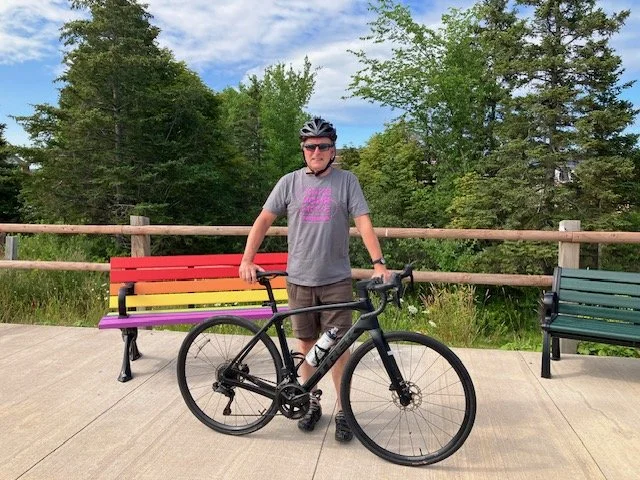
Dr. Gerard MacDonald is a retired family physician who now lives in Antigonish. He is a member of the Healthy Tomorrow Foundation’s board of directors.
After more than 45 years in medicine, I thought I understood prevention. Like many physicians, I have spent countless hours encouraging patients to exercise more, eat well and reduce their risk of chronic disease by example. I emphasized a healthy lifestyle and am sure I frequently amused them with tales of my running, cycling, hiking and skiing madly in all directions! Those conversations remain essential. But retirement has given me a broader perspective.
Returning home to Antigonish has reminded me that health is shaped long before patients arrive in our offices. Over the past several years, I've watched this community evolve. Trails connect neighbourhoods, public spaces are busier, and people of all ages are walking, cycling and gathering outdoors. A splendid example of this locally is the Harbour Hills Path, a paved multi-use active transportation corridor linking town and county. Active movement has become part of community life in visible ways.
As physicians, we know better health outcomes are not achieved simply by telling patients to exercise more. Many of the conditions we treat are influenced by lifestyle, but lifestyle itself is shaped by environment.
We can recommend walking, but we cannot prescribe a walkable community.
If safe places to walk are lacking, destinations are too far apart, or people don’t feel connected to their community, personal motivation alone will only take them so far.
Serving on the board of the Healthy Tomorrow Foundation has reinforced this way of thinking. Founded by Doctors Nova Scotia in 2018, the foundation is increasingly bringing together municipalities, schools, workplaces, community organizations and health professionals around a simple idea: lasting improvements in health require more than changing individual behaviour. They require communities that naturally support movement, connection and well-being.
In all stages of life, people occupy different environments. Children spend their days at school. Adults spend much of their time at work. As we age, our neighbourhoods, social connections and access to welcoming public spaces become increasingly important. The settings change throughout our lives, but the principle remains the same: the environments around us help determine how easily we can move, connect and stay healthy.
As physicians, we have an important role to play in those conversations. Not only in our clinics, but as residents, volunteers, board members and community leaders. Decisions about sidewalks, trails, parks, workplaces and neighbourhoods are not usually thought of as health decisions, yet they influence the health of our patients every day.
Medicine will always be about caring for people when they become ill. But after a career in medicine, I've come to believe that some of our greatest opportunities to improve health lie outside the walls of our clinics. By lending our voices to the communities we call home, we can help create places where healthy living becomes the natural choice, and not just the prescribed one. I am privileged to serve on Healthy Tomorrow Foundation as well as Make Your Move Antigonish (MYMA) locally, and I hope you will support your local community as well.